First 24 Hours After Water Damage: What to Do
Discovered water in your carpet? Don't panic—but do act fast. Here's your hour-by-hour guide.
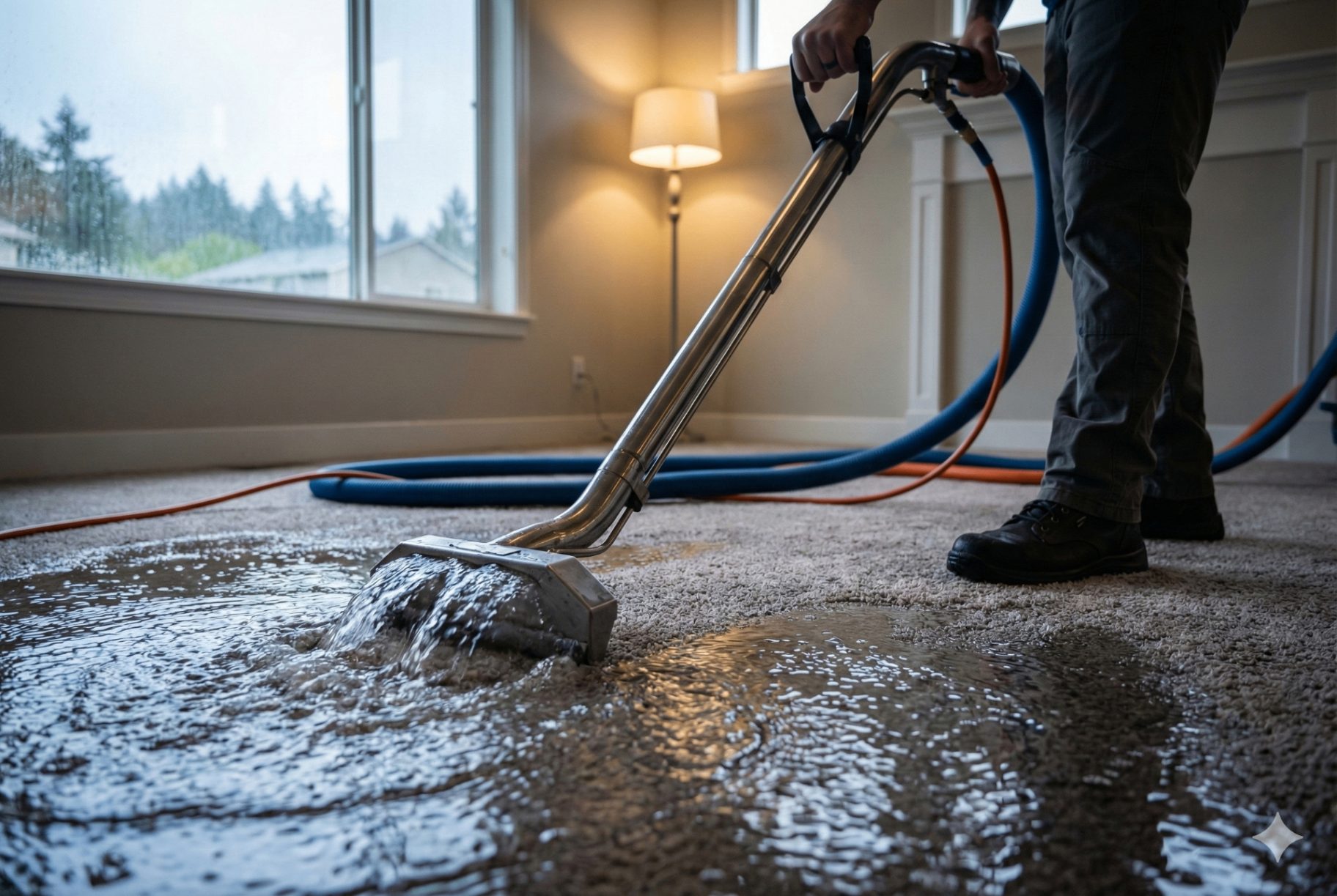
You just walked into a room and felt that unmistakable squish under your feet. Your heart sinks. Whether it's a burst pipe, a failed water heater, an overflowing washing machine, or Oregon rain that found its way in—you have standing water in your carpet.
In the Portland Metro area — especially during heavy rain and atmospheric river events — many homeowners suddenly find themselves Googling things like "water in my carpet," "basement carpet flooded," "carpet is soaked what do I do," or "how fast does mold grow in wet carpet." You're not alone. Oregon homes deal with this every winter, and acting quickly makes a big difference.
The good news: If you act quickly, you can often save your carpet and prevent serious damage. The critical window is the first 24 hours.
Why the First 24 Hours Matter
Best Window to Save Your Carpet
Water hasn't fully penetrated padding and subfloor. Mold hasn't started growing. Fast extraction = high chance of saving everything.
Mold Can Begin Growing
Odors develop. Carpet padding absorbs more water. Extraction still possible but more challenging.
Structural Damage Risk Increases
Subfloor damage, mold colonies, permanent odors. May need full restoration company.
Most Common Questions Homeowners Ask
Can wet carpet be saved?
Often, yes — especially if it's clean water from pipes or appliances and hasn't been sitting long. Quick extraction helps stop the spread so restoration companies can start structural drying if needed.
Do I need a restoration company?
If only the carpet is affected and the water is clean, extraction may be enough. If water came from outside, has been sitting 48+ hours, or there's visible structural damage, you'll need a licensed restoration contractor.
How long does carpet take to dry after extraction?
It varies based on weather, airflow, and how much water was absorbed. After emergency water extraction and proper airflow, carpet typically begins improving within hours.
Can I use a shop vac to get water out of the carpet?
You can, but it takes a long time and usually doesn't pull out enough water. A professional extractor removes far more water, much faster. Shop vac vs professional extraction isn't even close when you're dealing with a soaked carpet.
Is water extraction the same as restoration?
No. Water extraction removes the standing water from carpet and padding. Restoration companies handle structural drying, moisture detection, mold remediation, and rebuilding when needed.
First 30 Minutes: Immediate Actions
1. Stop the Water Source
If the water is still flowing, your first priority is stopping it. Know where your main water shut-off valve is located. For appliances, unplug them and turn off supply lines.
2. Check for Electrical Hazards
If water is near electrical outlets, switches, or appliances, turn off power to that area at the breaker box before walking through standing water.
3. Document Everything
Take photos and videos before you touch anything. This is crucial for insurance claims. Document the water source, affected areas, and any visible damage.
4. Call for Professional Help
Don't wait. Call for emergency water extraction immediately. The sooner extraction begins, the better your chances of saving the carpet and knowing how to dry carpet after a leak properly.
While Waiting for Help: What You Can Do
Move furniture off wet carpet
Get legs on foil or plastic to prevent staining
Remove area rugs
Get them off the wet carpet and lay flat to dry
Pick up valuables
Papers, books, electronics—get them to dry ground
Open windows
Get air circulating if weather permits
Run fans
Point them at the wet areas to start air movement
Turn on AC or dehumidifier
Helps reduce humidity and speed drying
What NOT to Do
- DON'T use a regular household vacuum on wet carpet (it's not designed for water and can damage the motor or electrocute you)
- DON'T use a steam cleaner—it adds more moisture
- DON'T place newspaper on the carpet (ink can transfer)
- DON'T assume it will "dry on its own"—carpet padding holds water like a sponge
- DON'T wait more than 24-48 hours to call for wet carpet help
- DON'T walk on extremely wet carpet more than necessary (pushes water deeper)
What Professional Water Extraction Looks Like
When we arrive for emergency water extraction, here's what happens:
- 1
Assessment
We check the extent of saturation—how far the water has spread and how deep it's gone.
- 2
Extraction
Using truck-mounted equipment, we pull out standing water and as much moisture as possible from carpet and padding.
- 3
Airflow Setup
We position high-powered air movers to accelerate drying.
- 4
Recommendations
We'll tell you honestly if the carpet can be saved or if you need a restoration company for structural issues.
Our focus: We specialize in non-invasive water extraction—getting the water out quickly without tearing up carpet or padding. For clean water emergencies (burst pipes, appliances, Oregon rain intrusion), we can often save your carpet at a fraction of what full restoration companies charge.
Water in Your Carpet Right Now?
We accept emergency water extraction calls 24 hours a day in Gresham, Troutdale, Sandy, Happy Valley, and SE Portland. Fast response, fair pricing, no pressure.
Text us photos of the situation—it helps us understand what you're dealing with.
What Water Extraction Does — and Doesn't — Do
What we do:
- Remove standing water from carpet
- Extract as much moisture as possible from carpet padding
- Set up airflow to help the drying process begin
- Give honest recommendations about next steps
What we don't do:
- Structural drying
- Mold remediation
- Removing drywall or flooring
- Sewage or contaminated water cleanup
We focus on fast, non-invasive carpet water extraction only. If we notice signs that structural drying or restoration work is needed, we'll recommend a licensed professional.
Helping Oregon Homes During Heavy Rain & Flooding
The Portland Metro area — especially Gresham, Troutdale, Happy Valley, Sandy, and SE Portland — sees flooded basements and soaked carpet during winter storms and atmospheric river events. If you've discovered water in your carpet, you're not alone.
Quick extraction helps limit how far the water spreads and gives restoration companies a better starting point if structural drying is needed. Whether it's Portland Metro flooding from heavy Oregon rain or a burst pipe, getting the standing water out fast is the first critical step.
When You Need More Than Extraction
We'll always be honest about what we can and can't handle. You need a licensed restoration company if:
- The water is contaminated (sewage, flood water from outside)
- Water has been sitting for more than 48 hours
- You see visible mold growth
- Drywall, baseboards, or subfloor are damaged
- The affected area is larger than 1-2 rooms
If we notice any of these conditions, we'll point it out and recommend a restoration contractor. No scare tactics—just honest guidance about what your situation needs.
The Bottom Line
The first 24 hours after discovering water in your carpet are crucial. Stop the source, document everything, move what you can, and call for professional extraction immediately. The faster the water is removed, the better your chances of saving the carpet and avoiding long-term issues.
Don't wait to see if it "dries out on its own." Carpet padding holds water like a sponge, and every hour increases the risk of deeper damage. If you're dealing with wet carpet right now, we can help you get the standing water out quickly so restoration professionals can take it from there if needed.